(The Benefits of Walking are Often Underestimated!)
I saw this post from Jen Hirst (@jenleehirst on X) that hit me hard and it’s 100% true in my own life:
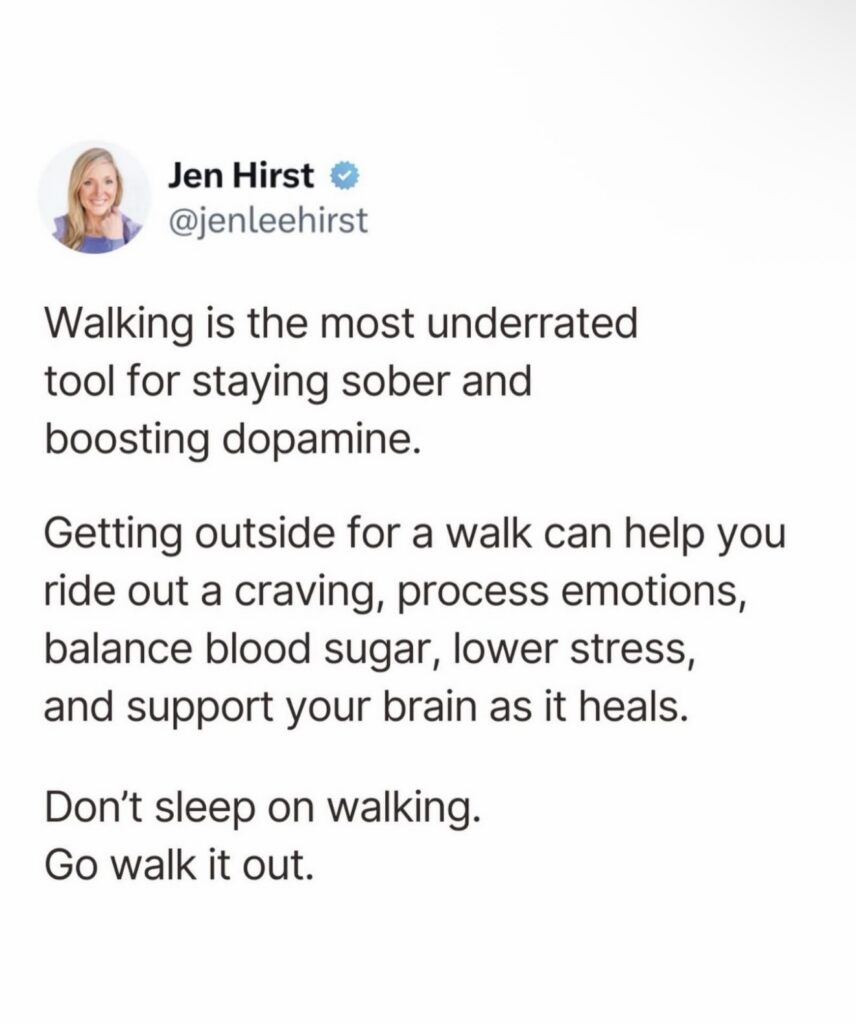
I’ve been living this truth every single morning.
My 4:15 am alarm goes off (thanks to the Mel Robbins 5-second rule), I throw on my hi-vis + LED gear, leash up the dog, and hit the quiet country roads here in rural Southwestern Ontario.
That 5+ km dawn walk has become non-negotiable, not just for the steps or weight loss, but for my ADHD brain.
How walking works for your brain — what the science says:
- Dopamine boost
- Physical activity directly triggers dopamine release, that feel-good neurotransmitter tied to motivation and reward. Studies show regular exercise can increase dopamine availability and even help protect dopamine-producing neurons. For those of us with ADHD, this natural lift helps combat that “food noise,” low motivation, and craving cycles without the crash. (PubMed)
- Physical activity directly triggers dopamine release, that feel-good neurotransmitter tied to motivation and reward. Studies show regular exercise can increase dopamine availability and even help protect dopamine-producing neurons. For those of us with ADHD, this natural lift helps combat that “food noise,” low motivation, and craving cycles without the crash. (PubMed)
- Emotional regulation & stress relief
- Walking (especially in nature) helps calm the brain’s stress response, lowers cortisol, and improves mood by increasing blood flow and releasing a cocktail of neurotransmitters like serotonin, dopamine, and endorphins. Research links it to better emotional processing, reduced anxiety, and even growing new brain cells via BDNF (brain-derived neurotrophic factor). (AARP)
- Walking (especially in nature) helps calm the brain’s stress response, lowers cortisol, and improves mood by increasing blood flow and releasing a cocktail of neurotransmitters like serotonin, dopamine, and endorphins. Research links it to better emotional processing, reduced anxiety, and even growing new brain cells via BDNF (brain-derived neurotrophic factor). (AARP)
- Cravings, blood sugar & brain healing
- Getting outside helps stabilize blood sugar, ride out urges, and gives your brain space to process emotions. Nature walks in particular reduce rumination and support overall mental recovery; exactly why my rural Ontario routes feel so restorative. (PubMed)
- Getting outside helps stabilize blood sugar, ride out urges, and gives your brain space to process emotions. Nature walks in particular reduce rumination and support overall mental recovery; exactly why my rural Ontario routes feel so restorative. (PubMed)
- Long-term brain health
- Consistent walking improves attention, memory, and resilience – key for adult ADHD brains like mine that thrive on routine and movement. Pairing it with my supplement stack (L-Tyrosine, Lion’s Mane, Creatine, etc.) feels like giving my brain the best possible support. (WebMD)
What I notice personally:
- That sustainable energy and mood lift that no quick fix can match.
- Sharper focus that carries into my workday and content creation for the site.
- Fewer binge urges and better consistency with high-protein meals.
- Clearer headspace for big life stuff – like supporting my daughter’s transition to college.

You May Also Like
If you enjoyed this post on walking for dopamine and brain health, here are a few more from my journey that pair perfectly with it:
- My Retatrutide Progress Update: 25 lbs Down & What I’m Learning
- Real talk on peptides, food noise reduction, and how movement fits into the bigger picture.
- Real talk on peptides, food noise reduction, and how movement fits into the bigger picture.
- Nootropics for ADHD Focus: Real Results with Natural Stack 2026
- My personal supplement experiments (L-Tyrosine, Lion’s Mane, etc.) and how they complement daily walks.
- My personal supplement experiments (L-Tyrosine, Lion’s Mane, etc.) and how they complement daily walks.
- 7-Minute HIIT Workouts for ADHD Brains: Quick Focus Boosters You Can Do Anywhere
- When you want more than walking — short, effective movement that sharpens concentration.
- When you want more than walking — short, effective movement that sharpens concentration.
- Your Body Reset: Dr. Rhonda Patrick on Exercise, Nutrition & Longevity
- Science-backed ways to combine movement, nutrition, and routines for lasting energy.
- Science-backed ways to combine movement, nutrition, and routines for lasting energy.
- Why Autism Looks Different in Women: ADHD Overlaps & AuDHD Insights
- Deeper dive into neurodivergent brains and the tools (like nature walks) that help.
Final Thoughts
Walking is free. It’s simple. And it actually works. It doesn’t require specialized gear or skills.
Even on the days my ADHD brain wants to negotiate staying in bed, I remind myself: this is the compound interest of my greater self. Small daily move → big long-term benefits in mood, motivation, and clarity.
Your turn… What’s one walk you can commit to this week? Drop it in the comments or tag me in your morning walk stories. I’d love to cheer you on!
-Mere Penny
Follow Me on Facebook
Join me over on GreaterSelf where I share daily encouragement, quick tips, and behind-the-scenes moments from my ADHD fitness journey.