(Lessons from Dr. Anna Lembke on the Mel Robbins Podcast)
If you’re like me – trying to maintain routines, take care of your family and household and perform well at work – you’ve probably had days where motivation just… vanishes. You know what you “should” do, but scrolling, snacking, or another quick hit feels easier. A dopamine detox might be what you need.
In her conversation with Mel Robbins, Dr. Anna Lembke (Stanford professor, addiction medicine expert, and author of Dopamine Nation) nails exactly why this happens. It’s not a lack of discipline. Modern life has hijacked our brains with constant easy dopamine hits, throwing off our natural pleasure-pain balance. The good news? You can reset it and get motivated again – even when you don’t feel like it.
If you apply even a few of these ideas, you’ll stop organizing your day around quick rewards and start showing up for the things that matter: your health, routines, family, and goals.
GreaterSelf.net is fully reader supported. As an Amazon Associate, I earn on qualifying purchases at no cost to you. Thank you for supporting my writing.
What Is Dopamine and Why Does It Matter for Motivation?
Dopamine is a neurotransmitter in your brain’s reward pathway. It’s not just about “feeling good”; it’s about reinforcement. The faster and bigger the dopamine release, the more your brain tags that behavior as “survival-important” and wants you to repeat it.
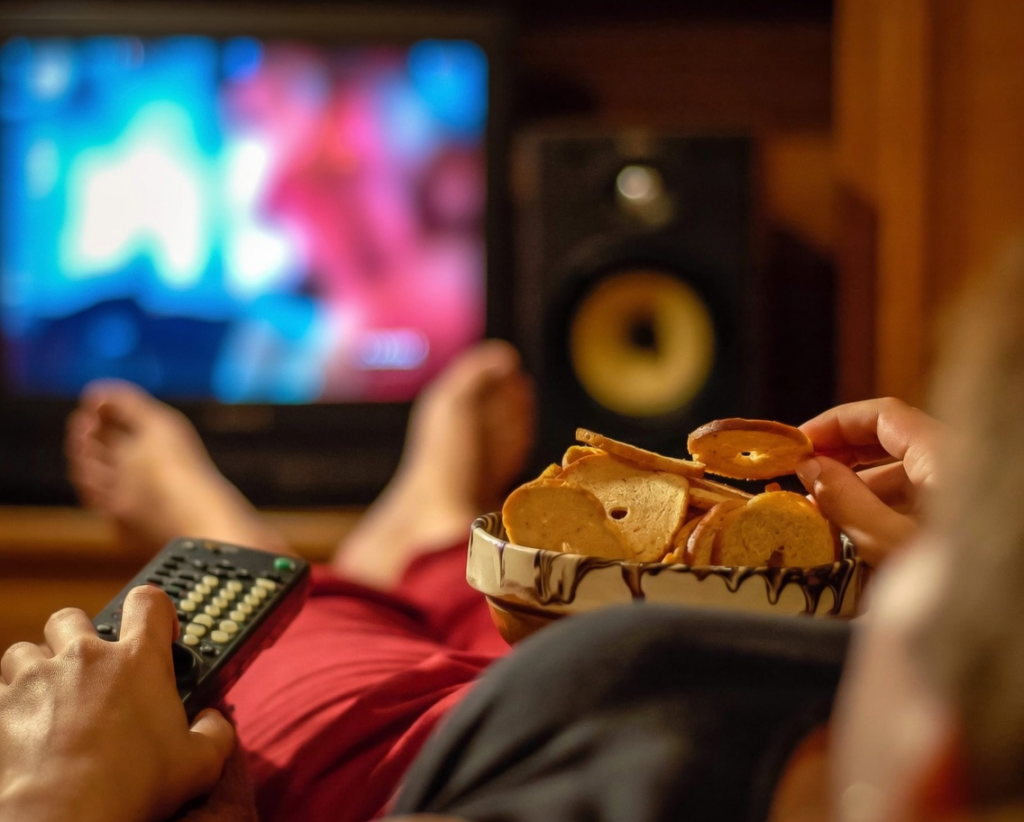
- Easy pleasures (phone scrolling, ultra-processed snacks, notifications, caffeine spikes) deliver fast, potent hits.
- Your brain learns to chase them, making effortful tasks (workouts, deep work, consistent routines) feel like Mount Everest.
Dr. Lembke points out we’re all unconsciously structuring our lives around these little rewards, from the first phone check in the morning to evening wine/TV/cupcakes. For ADHD brains especially, this cycle amps up restlessness, boredom, and food noise when the easy hits stop.
I notice when I stick to my strict morning routine, my focus lasts longer and binge urges drop. This science explains why.
The Pleasure-Pain Seesaw: Your Brain’s Built-In Balance
Here’s the game-changer metaphor from Dr. Lembke:
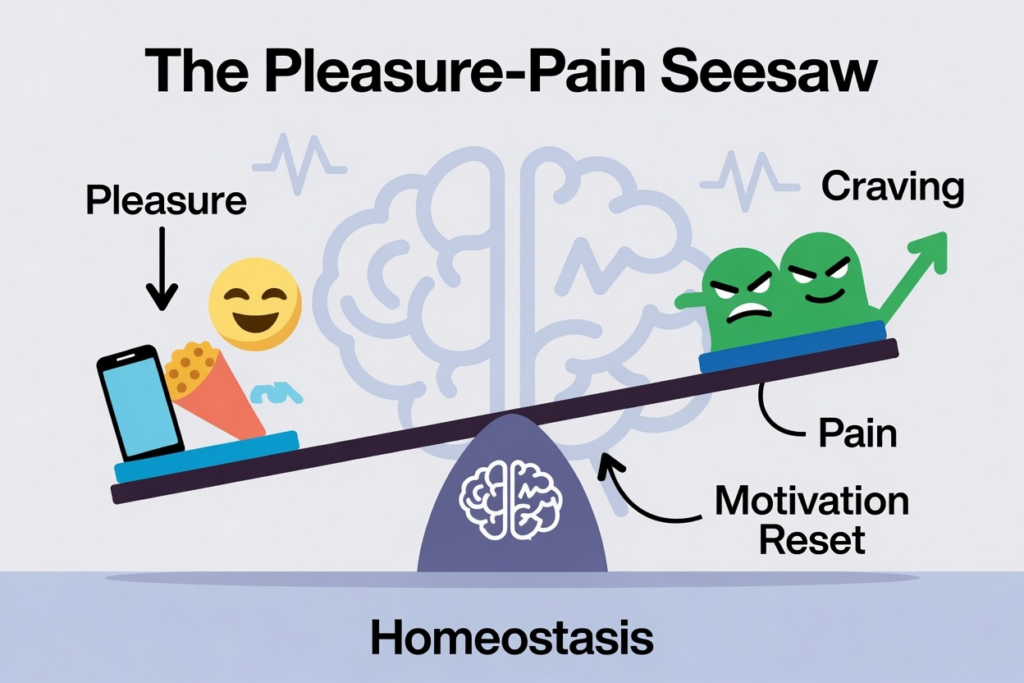
Imagine a seesaw in your brain’s reward center. At rest, it’s level (homeostasis).
- Pleasure (e.g., potato chips, a scroll session) tips it toward pleasure.
- Your brain immediately sends “gremlins” to the pain side to restore balance. They often overshoot, leaving you with craving, restlessness, or a deficit state.
Repeated easy pleasures reset your joy set point higher. Normal life feels blah, so you need more stimulation just to feel okay. This is why motivation tanks and why “one more” episode or snack leads to the crash.
Key takeaway: Chasing pleasure creates more pain in the long run. To feel more joy and motivation, we need to moderate easy rewards and intentionally lean into manageable discomfort.
Why Modern Life Makes This Worse (and How It Hits ADHD Hard)
Dr. Lembke highlights three factors that make things addictive: accessibility, potency, and novelty (think phones in your pocket, infinite feeds, hyper-palatable foods). We’re all vulnerable, but for those of us with ADHD dopamine dysregulation, it’s amplified.
Result? Compulsive overconsumption → chronic dopamine deficit → everything hard feels impossible.
Dr. Lembke’s Practical Protocol to Reset and Rebuild Motivation
You don’t need a radical 30-day detox (though that can help). Start small and build:
- Notice Your Patterns
- Track when you reach for easy hits (phone, snacks, music flipping). Awareness is step one.
- Track when you reach for easy hits (phone, snacks, music flipping). Awareness is step one.
- Dopamine Detox / Abstain
- Reduce stimulation. Put the phone in another room, skip background music/podcasts during tasks, delay caffeine. Let boredom return—it’s where creativity and motivation rebuild.
- Reduce stimulation. Put the phone in another room, skip background music/podcasts during tasks, delay caffeine. Let boredom return—it’s where creativity and motivation rebuild.
- Lean Into Right-Sized Pain
- Do the hard thing first (5-second rule, anyone?). Cold exposure, exercise, deep work, or even just sitting with discomfort. The gremlins will eventually tip the balance back toward pleasure and sustained motivation.
- Do the hard thing first (5-second rule, anyone?). Cold exposure, exercise, deep work, or even just sitting with discomfort. The gremlins will eventually tip the balance back toward pleasure and sustained motivation.
- Self-Binding
- Create barriers: app blockers, no snacks in the house, scheduled “white space” for rest without screens.
- Create barriers: app blockers, no snacks in the house, scheduled “white space” for rest without screens.
- Embrace Boredom and Effort
- Boredom is medicine. Consistent routines (like my 5km dawn walks) compound into natural dopamine from accomplishment, not cheap hits.
Dr. Lembke emphasizes: This isn’t about shame or perfection. It’s about working with your brain instead of against it.

How This Fits My Greater Self Journey (and Yours)
As someone managing ADHD with supplements (L-Tyrosine, Lion’s Mane, etc.), high-protein meals, retatrutide-supported consistency, and strict routines, this resonates deeply. Easy pleasures used to derail my mornings. Now, leaning into discomfort (early walks in the dark, focused writing blocks) has helped with weight loss progress, business building, and showing up as a mom.
Try this today: After your next walk or task, note how you feel without the immediate reward. Build from there.
You May Also Like
- Dopamine Nation Book Summary: Key Takeaways for ADHD Brains
- Dr. Anna Lembke’s core ideas explained simply + how I’m applying them to daily life.
- My Current ADHD Supplement Stack: What I Take & What I Notice
- L-Tyrosine, Lion’s Mane, Creatine, and more — full routine with real results.
- Morning Routine for ADHD: My 4:30am Ritual That Actually Works
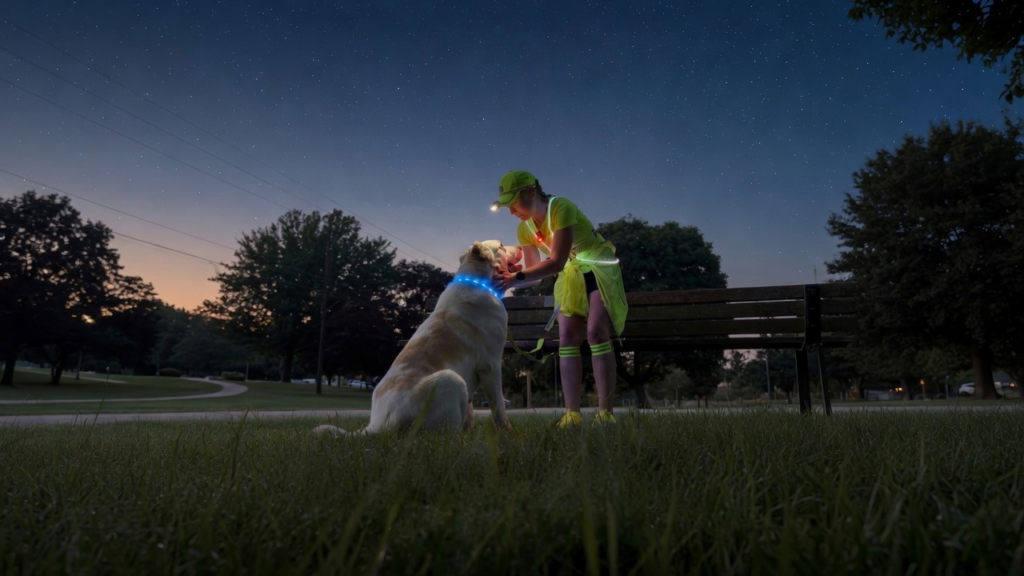
- High-protein breakfast, dawn walks in hi-vis, and consistency tips that stick.
- Retatrutide Progress Update: 25lbs Down & What I’ve Learned
- Peptide journey, food noise reduction, and how it pairs with dopamine-friendly habits.
Final Thoughts
You’re not broken or lazy. Your brain is just overstimulated in a world designed for it. By moderating easy dopamine and embracing discomfort, you can reclaim focus, joy, and real motivation.
Listen to the full Mel Robbins episode with Dr. Anna Lembke here. What’s one small change you’ll make this week? Drop it in the comments, I read them all and love hearing your wins.
Share this post with someone who needs the motivation reset.
-Mere Penny
Follow Me on Facebook
Join me over on GreaterSelf where I share daily encouragement, quick tips, and behind-the-scenes moments from my ADHD fitness journey.