(My Best Strategies That Actually Help)
Some days my brain just… shuts down.
The laundry is piling up, that important email has been sitting unanswered for days, and instead of doing anything about it, I’m frozen on the couch scrolling on my phone. I know what needs to get done, but starting feels impossible.
If this sounds familiar, you’re not lazy, broken, or failing. This is ADHD task paralysis (also called ADHD paralysis or executive dysfunction), and it’s incredibly common.
For years it made me feel ashamed. But once I understood what was happening neurologically and started collecting strategies that actually work for my ADHD brain, everything shifted. I still have hard days, but I get unstuck much faster now.
Today I’m sharing the tools that have helped me the most. These aren’t magic fixes, but they’re realistic and kind. They work often enough that I keep using them.
What Is ADHD Task Paralysis?
Task paralysis happens when your brain’s executive functions (the mental skills responsible for planning, starting tasks, and staying organized) get overwhelmed. It’s not procrastination in the typical sense; it’s a neurological freeze response.
Common triggers include:
- Too many choices or unclear next steps
- Perfectionism (the fear that it won’t be “right”)
- Overwhelm from a big or emotionally charged task
- Low dopamine or mental fatigue
The result? You feel stuck even though you desperately want to move forward.
Here’s the good news – there are ways to work with your brain instead of fighting it.
My Most Effective Strategies for Breaking Task Paralysis
Here are the approaches that consistently help me:
1. The 2-Minute (or Even 30-Second) Rule
I tell myself: “I only have to do the tiniest possible version of this task.”
- Not “clean the kitchen” → just “put the one dish in the sink.”
- Not “write the report” → just “open the document and type the title.”
Lowering the bar this much removes the pressure and often creates enough momentum to keep going. This is one of my absolute go-tos.
2. Tiny Physical Next Actions
Instead of thinking in big vague concepts, I ask: “What is the very next physical action?” This bypasses overthinking. Writing it down helps even more. My brain responds better to concrete steps than abstract goals.
3. Body Doubling
This one surprised me with how well it works. Body doubling means working alongside someone else (in person or virtually). The presence of another person provides gentle accountability and focus support.
I use Focusmate for virtual sessions or ask a friend to hop on a silent video call. Even YouTube “body doubling” videos have saved me on tough days.
4. Dopamine Priming & Momentum Building
I start with one tiny “win” task that’s easy and satisfying; making my bed, drinking a glass of water, or tidying one small surface. That small success gives my brain a little dopamine hit and makes the next task feel more doable.
5. Change of Environment (The Location Hack)
Sometimes my brain is stuck because the current environment has too many associations with distraction. Moving to a different room, sitting outside, or even going to a café can reset the mental state.
6. The “Ugly First Draft” Permission
Perfectionism fuels a lot of my paralysis. Giving myself explicit permission to do it badly (“This can be messy, that’s okay”) removes the emotional block. I can always edit or improve it later.
7. External Accountability & Brain Dumps
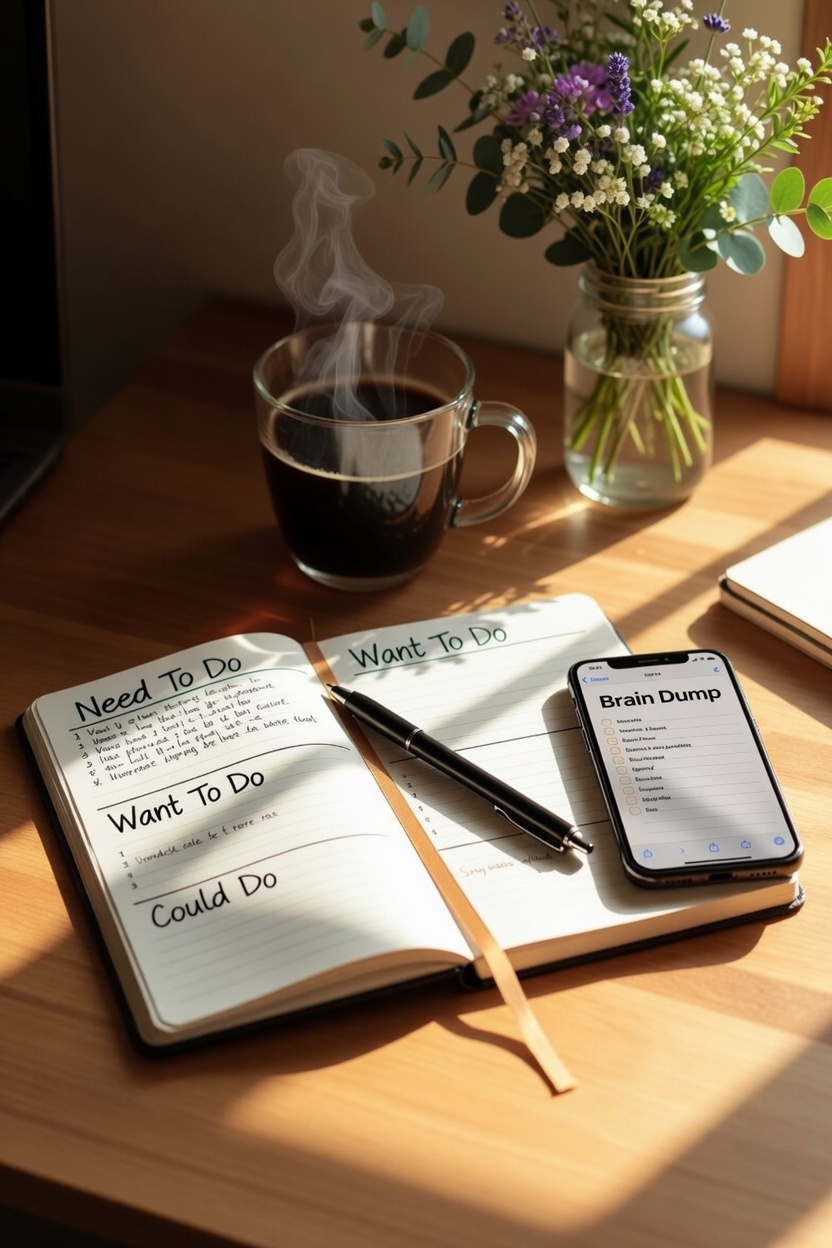
I do a quick brain dump – writing every swirling thought on paper or in an app. Getting it out of my head reduces mental clutter. Then I text a friend: “I’m starting X right now” or use a tool like Focusmate for built-in accountability.
Bonus Tools I Actually Use
- Goblin Tools – The “magic to-do list” feature breaks tasks down automatically.
- Focusmate – Virtual body doubling.
- Tiimo or Structured – Visual, ADHD-friendly planners.
- Music or ambient noise (lofi, brown noise, or upbeat playlists).
- Timers – but not always strict Pomodoro. Sometimes a 5-minute or 10-minute timer feels less intimidating.
A Gentle Reminder
Task paralysis doesn’t mean you’re failing. It means your brain needs more support, not more criticism. Be kind to yourself on the hard days. Progress is still progress even if it’s imperfect or slower than you’d like.
These strategies have helped me move from feeling completely frozen for days to getting important things done, even if they’re not perfect. And that’s made a huge difference in how I feel about myself.
You’ve got this. Your brain just works differently, and that’s okay. With the right supports, you can do hard things.
You May Also Like
If you found this helpful, here are a few more posts from the blog that explore practical ADHD strategies:
- Nighttime Supplements for Quality Sleep with ADHD My personal supplement stack that finally helped me fall asleep faster and stay asleep.
- Omega-3s for ADHD: What the Research Says Why I switched to harp seal oil and what the studies actually show about focus and mood support.
- My Realistic ADHD Evening Wind-Down Routine A gentle, low-pressure routine that helps my racing mind settle at night.
- Rejection Sensitive Dysphoria (RSD) in Adults with ADHD Understanding and working with intense emotional reactions common in ADHD.
- The Best ADHD-Friendly To-Do List System I’ve Tried in 2026 The hybrid system that finally works with (not against) my ADHD brain.
Final Thoughts
Which of these strategies are you going to try first? Or what’s one thing that helps you break through task paralysis? Drop it in the comments – I read every single one and love hearing what works for you!
If this post helped, feel free to share it with someone who might need it.
-Mere Penny
Follow Me on Facebook
Join me over on GreaterSelf where I share daily encouragement, quick tips, and behind-the-scenes moments from my ADHD journey.
Visit The Greater Self Storefront on Amazon.ca
As an Amazon Associate, I earn on qualifying purchases at no cost to you.