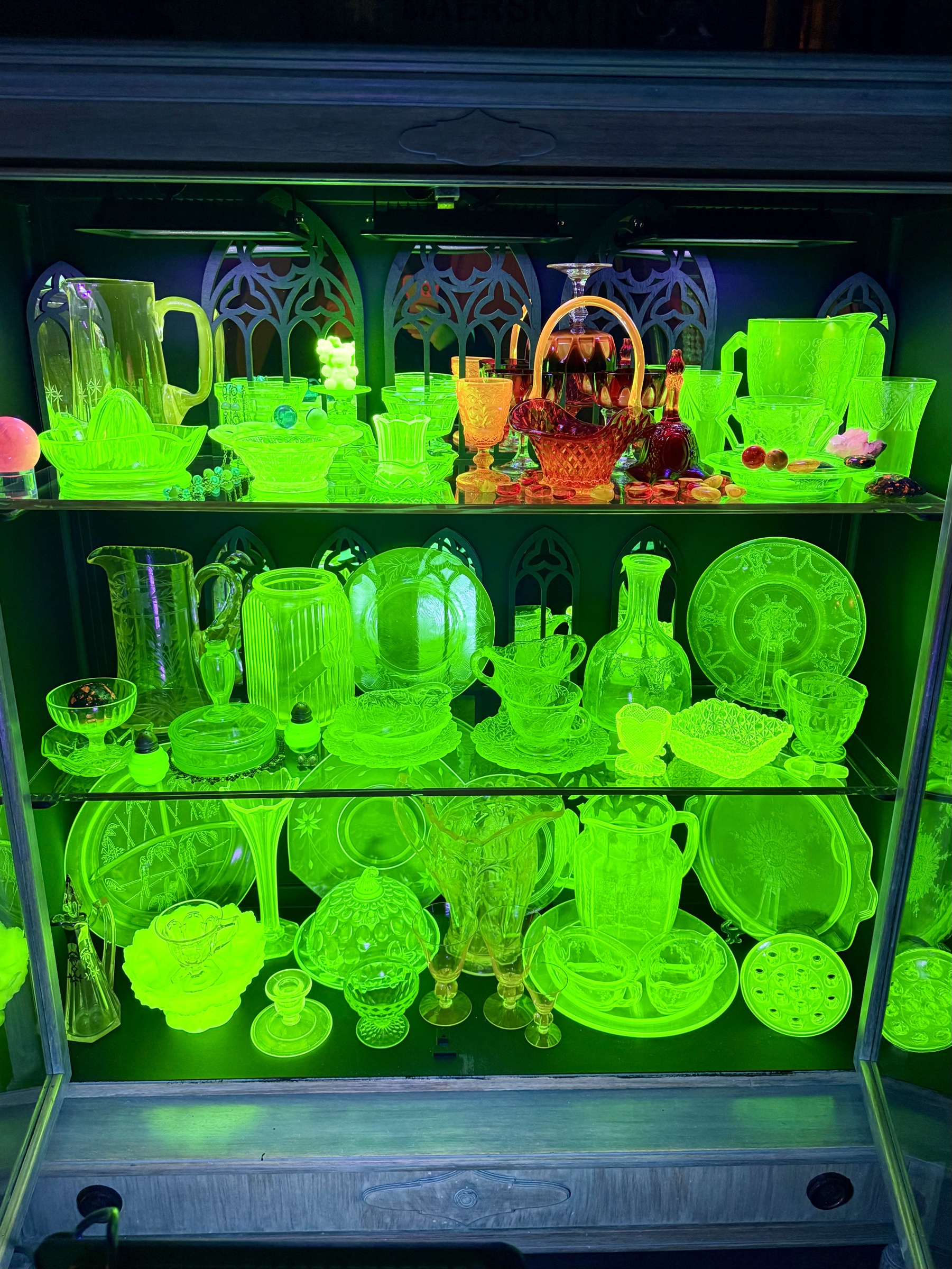
(Channel Your Hyperfocus Without Burning Out!)
If you’ve ever disappeared down a Wikipedia rabbit hole for six hours, perfected a single hobby skill until your coffee went cold, or found yourself unable to switch tasks even when you knew you needed to eat or move… you’ve experienced an ADHD hyperfixation.
For adults with ADHD, autism, or AuDHD (the overlap of both), hyperfixations are one of the most double-edged aspects of how our brains work. They can feel like a superpower – delivering deep joy, expertise, and flow states. But they can also quietly sabotage the very routines, health goals, and consistency we fight so hard to build.
In this post, we’ll break down what hyperfixations really are, how they show up differently (and similarly) in ADHD and autism, and – most importantly – practical, ADHD and AuDHD-friendly strategies to stop fighting your brain and start working with it.
GreaterSelf.net is fully reader supported. As an Amazon Associate, I earn on qualifying purchases at no cost to you. Thank you for supporting my writing.
What Are Hyperfixations, Really?
Hyperfixation (sometimes called hyperfocus in ADHD contexts) is an intense, prolonged state of attention on a specific interest, topic, task, or activity; often to the exclusion of everything else.
Key characteristics:
- Time distortion or “time blindness” – hours can feel like minutes
- Difficulty disengaging, even when you want or need to
- Heightened enjoyment, learning, or dopamine reward from the activity
- Reduced awareness of internal signals (hunger, thirst, fatigue, bathroom needs)
- Post-fixation crash or overwhelm when you finally surface
It’s not the same as regular “getting in the zone.” It’s more immersive, more consuming, and often feels involuntary.
Important distinction: In ADHD communities, people often say “hyperfocus.” In autism communities, it’s more commonly tied to “special interests.” In AuDHD, you often get both – intense special interests plus the dopamine dysregulation and executive function challenges of ADHD.

Hyperfixations in ADHD vs. Autism (and the AuDHD Reality)
ADHD Hyperfixations / Hyperfocus
- Often triggered by novelty, urgency, or high dopamine reward
- Can lock onto anything productive (deep work, learning) or unproductive (scrolling, gaming, organizing one drawer for 4 hours)
- Strongly linked to dopamine dysregulation: the brain chases the hit and struggles to shift when the hit fades
- Common adult impact: neglected self-care, missed meals, delayed work tasks, inconsistent routines
Autism Special Interests / Monotropic Focus
- Often deeper, more passion-driven and long-term
- Provide comfort, identity, emotional regulation, and expertise
- Can be lifelong or evolve slowly
- Monotropism (narrow, deep attention tunnels) makes it hard to split focus or transition
The AuDHD Overlap
Many late-diagnosed adults (especially women) recognize both patterns. Your hyperfixations might:
- Feel incredibly rewarding and identity-affirming (autism side)
- Be hard to interrupt or redirect toward “boring but necessary” tasks (ADHD side)
- Create internal conflict: loving the deep dive but resenting how it derails your carefully built morning routine or health habits
If you’ve been exploring AuDHD traits alongside your ADHD diagnosis, this overlap can feel both validating and frustrating.
The Double-Edged Sword: Pros and Cons
The Superpower Side
- Deep expertise and flow states
- You can learn complex topics faster and retain more when hyperfixated.
- You can learn complex topics faster and retain more when hyperfixated.
- Creativity and problem-solving
- Many breakthroughs happen in these states.
- Many breakthroughs happen in these states.
- Joy and emotional regulation
- Special interests often act as a nervous system reset.
- Special interests often act as a nervous system reset.
- Potential for meaningful output
- Content creation, skill-building, side projects, or even career pivots can emerge from hyperfixations.
- Content creation, skill-building, side projects, or even career pivots can emerge from hyperfixations.
- For many AuDHD adults: hyperfixations on wellness, research, or self-improvement topics become the fuel for personal growth journeys.
The Challenge Side
- Routine sabotage
- That perfectly planned 4:30 a.m. wake-up, high-protein breakfast, and dawn walk can vanish when a hyperfixation takes over.
- That perfectly planned 4:30 a.m. wake-up, high-protein breakfast, and dawn walk can vanish when a hyperfixation takes over.
- Neglected basics
- Meals, hydration, movement, sleep, and hygiene get ignored.
- Meals, hydration, movement, sleep, and hygiene get ignored.
- Burnout and executive dysfunction rebound
- After surfacing, switching tasks feels impossible. The “I was so productive… now I can’t do anything” crash is real.
- After surfacing, switching tasks feels impossible. The “I was so productive… now I can’t do anything” crash is real.
- Relationship and responsibility strain
- Partners, kids, work deadlines, or pets (yes, even the morning dog walk) can get unintentionally deprioritized.
- Partners, kids, work deadlines, or pets (yes, even the morning dog walk) can get unintentionally deprioritized.
- Health goal interference
- Weight management, supplement consistency, or movement routines suffer when hyperfixation overrides hunger cues or scheduled breaks.
Sound familiar? You’re not alone and it’s not a willpower problem. It’s brain wiring.

How to Harness Hyperfixations Without Burning Out
The goal isn’t to eliminate hyperfixations (they’re part of how many AuDHD brains work). The goal is awareness + boundaries + strategic channeling.
Here are practical strategies that work with – not against – ADHD and AuDHD brains:
1. Build Awareness First
- Notice your personal “hyperfixation entry signals”: loss of time awareness, ignoring body cues, feeling “locked in.”
- Track patterns: What topics or activities trigger it most? (Research? Specific hobbies? Content creation? Even doomscrolling?)
- Use a simple note or voice memo when you surface: “Hyperfixated on X from 2–7pm. Missed lunch and walk.”
2. Time-Box with Compassion (Not Punishment)
- Set a visible timer before you start… and actually honor it.
- Try the “hyperfixation sandwich”: Do one non-negotiable task first (e.g., morning walk or protein breakfast), then allow focused time, then another anchor task.
- Use visual or auditory cues: countdown timers, smartwatch alerts, or even a playlist that ends after your allotted time.
- Pro tip for AuDHD: Make the exit as soft as possible. Abrupt alarms can spike overwhelm. Try a 5-minute warning + a grounding transition (stretch, glass of water, step outside).
3. Protect Your Non-Negotiables
- Identify your “must-do” anchors that support your greater self (morning movement, meals, sleep, key work tasks, family time).
- Schedule them first in your day or week, before open hyperfixation windows.
- Treat hyperfixation time as a reward or scheduled block, not the default state.
4. Channel the Energy Productively
- Redirect hyperfixations toward high-value activities when possible: deep research for your blog or business, learning a skill that serves your goals, creative projects.
- Many AuDHD adults turn special interests into content, communities, or income streams.
- If the fixation is less productive (e.g., intense research on something niche), give it a contained “research hour” rather than all-day immersion.
5. Use Body Doubling and Accountability
- Work alongside someone (in person or virtual co-working) to make transitions easier.
- Tell a trusted person: “I’m going into hyperfixation mode on this project for 2 hours, check on me after.”
- Apps or communities designed for neurodivergent focus can help.
6. Support Your Dopamine System Daily
Hyperfixations are often a brain chasing regulation. Supporting baseline dopamine can reduce desperate, all-consuming fixations:
- Consistent movement (even short walks)
- High-protein nutrition
- Morning light exposure and routines
- Evidence-based supplements that support focus and mood (see related posts below)
This isn’t about “fixing” yourself, it’s about giving your brain what it needs so hyperfixations become tools instead of takeover states.
7. Practice Self-Compassion and Reframing
- Hyperfixations aren’t laziness or lack of discipline. They’re a feature of how your brain seeks stimulation and meaning.
- After a big fixation session, avoid the shame spiral. Ask: “What did I gain? What do I need now to recover?”
- Build in recovery time intentionally – white space, rest, gentle movement.

Hyperfixations as Part of Your Greater Self Journey
For those of us navigating adult ADHD, exploring AuDHD traits, and working toward consistent health, routines, and growth, hyperfixations are neither purely good nor purely bad. They’re a powerful part of our wiring.
When channeled, they fuel deep learning, creative output, passion projects, and the kind of intense focus that builds businesses, skills, and self-knowledge.
When unmanaged, they quietly erode the very foundations (routines, self-care, relationships) we need to thrive.
Change happens with awareness, boundaries, and self-compassion, not by forcing a neurotypical schedule onto a neurodivergent brain.
Your hyperfixations can become one of your greatest assets on the path to greater health, greater wealth (in all forms), and greater self.
Your Turn
What hyperfixations have you noticed in your own life? Do they tend to center around learning, creating, organizing, or something else entirely? Have you found ways to work with them rather than against them?
I’d love to hear your experiences in the comments. Your story might help another AuDHD adult feel less alone.
-Mere Penny
You May Also Like
- Why Autism Looks Different in Women: ADHD Overlaps & AuDHD Insights
- My personal experiences with late-diagnosed ADHD, masking, and the AuDHD traits that finally started to make sense.
- My personal experiences with late-diagnosed ADHD, masking, and the AuDHD traits that finally started to make sense.
- Nootropics for ADHD Focus: Real Results with Natural Stack 2026
- What I actually noticed after trying a natural nootropic stack as an alternative to stimulants.
- What I actually noticed after trying a natural nootropic stack as an alternative to stimulants.
- My Retatrutide Progress Update: 25 lbs Down & What I’m Learning
- Real results, dosing insights, and how peptides intersect with ADHD food noise and routines.
- Real results, dosing insights, and how peptides intersect with ADHD food noise and routines.
- How to Meditate with ADHD: What Finally Worked When My Brain Wouldn’t Shut Up
- Practical techniques that helped calm my racing mind.
- Practical techniques that helped calm my racing mind.
- 7-Minute HIIT Workouts for ADHD Brains: Quick Focus Boosters You Can Do Anywhere
- Short, effective movement that supports dopamine and concentration.
- Short, effective movement that supports dopamine and concentration.
- Your Body Reset: Dr. Rhonda Patrick on Exercise, Nutrition & Longevity
- Science-backed tips for energy, focus, and feeling better long-term.
Follow Me on Facebook
Join me over on GreaterSelf where I share daily encouragement, quick tips, and behind-the-scenes moments from my ADHD fitness journey.