(All the Tools You Need To Enhance Focus & Productivity)
Working from home with ADHD can feel like a blessing and a curse at the same time. No commute is amazing… but when your office is also your living space, distractions are everywhere and focus can disappear in seconds.
After years of trial and error, I’ve finally created a home office that works with my ADHD brain instead of against it. It’s not perfect or Pinterest-pretty – it’s functional, gentle, and flexible.
Here’s what actually helps me stay productive without burning out.
GreaterSelf.net is fully reader supported. As an Amazon Associate, I earn on qualifying purchases at no cost to you. Thank you for supporting my writing.
Why a Standard Home Office Doesn’t Work for ADHD Brains
Traditional advice (clean desk, minimalist setup, strict routines) often backfires for us. Our brains need stimulation + structure + forgiveness all at once.
The goal isn’t to look productive. The goal is to make focus feel easier.
My ADHD-Friendly Home Office Setup
1. Zoning Instead of a Perfect Desk
I don’t have one single workstation. I have zones:
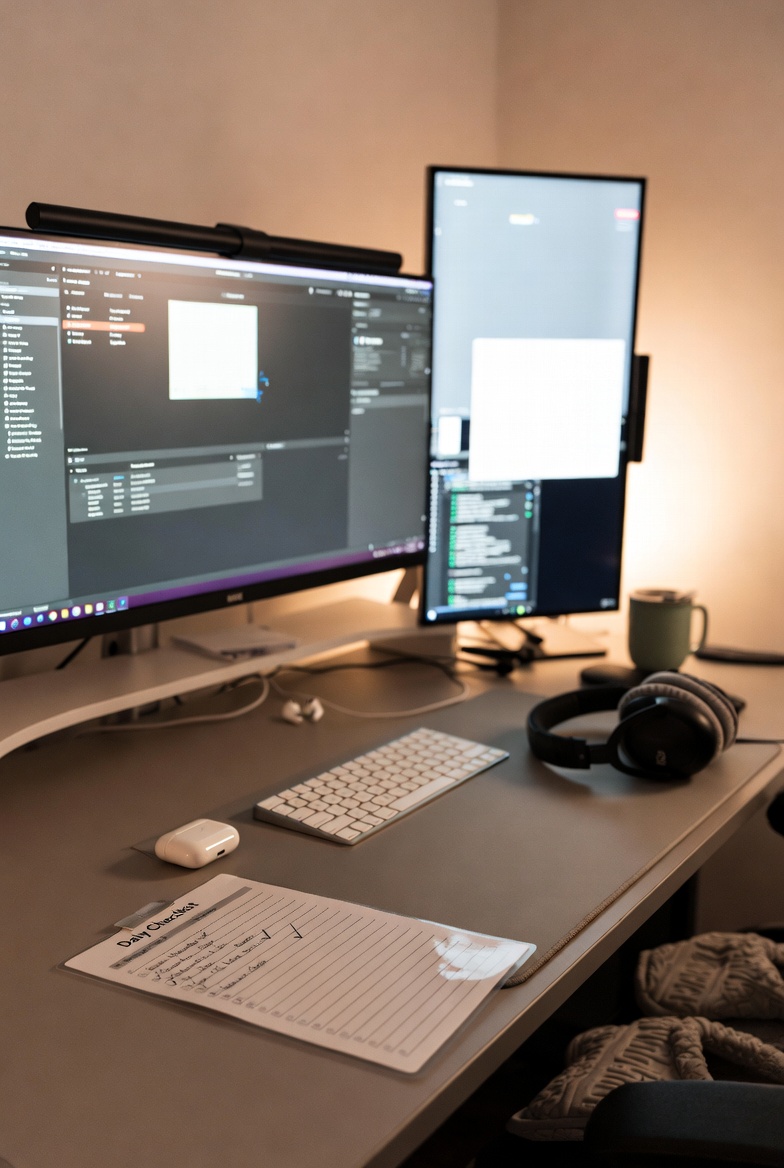
- Focus desk (facing a wall, minimal visual clutter)
- Movement spot (standing desk converter or just pacing area)
- “Reset chair” in the corner with a weighted blanket for when I’m overstimulated
2. Sensory Support
(This makes the biggest difference for me) ADHD brains are often extra sensitive to sensory input, so I intentionally curate what my body experiences while working:
- Sound
- Noise-cancelling headphones are non-negotiable. I alternate between brown noise, instrumental lo-fi, or nature sounds (rain, ocean). Silence is actually too loud for me.
- Noise-cancelling headphones are non-negotiable. I alternate between brown noise, instrumental lo-fi, or nature sounds (rain, ocean). Silence is actually too loud for me.
- Scent
- A small diffuser with calming essential oils (lavender, rosemary, or citrus for focus). Certain smells help anchor me and reduce anxiety.
- A small diffuser with calming essential oils (lavender, rosemary, or citrus for focus). Certain smells help anchor me and reduce anxiety.
- Touch / Fidget
- I keep a variety of fidget tools on my desk – a stress ball, textured worry stone, stretchy bands for my hands, and even a small pile of kinetic sand. Having something to do with my hands helps my brain focus better.
- I keep a variety of fidget tools on my desk – a stress ball, textured worry stone, stretchy bands for my hands, and even a small pile of kinetic sand. Having something to do with my hands helps my brain focus better.
- Sight / Lighting
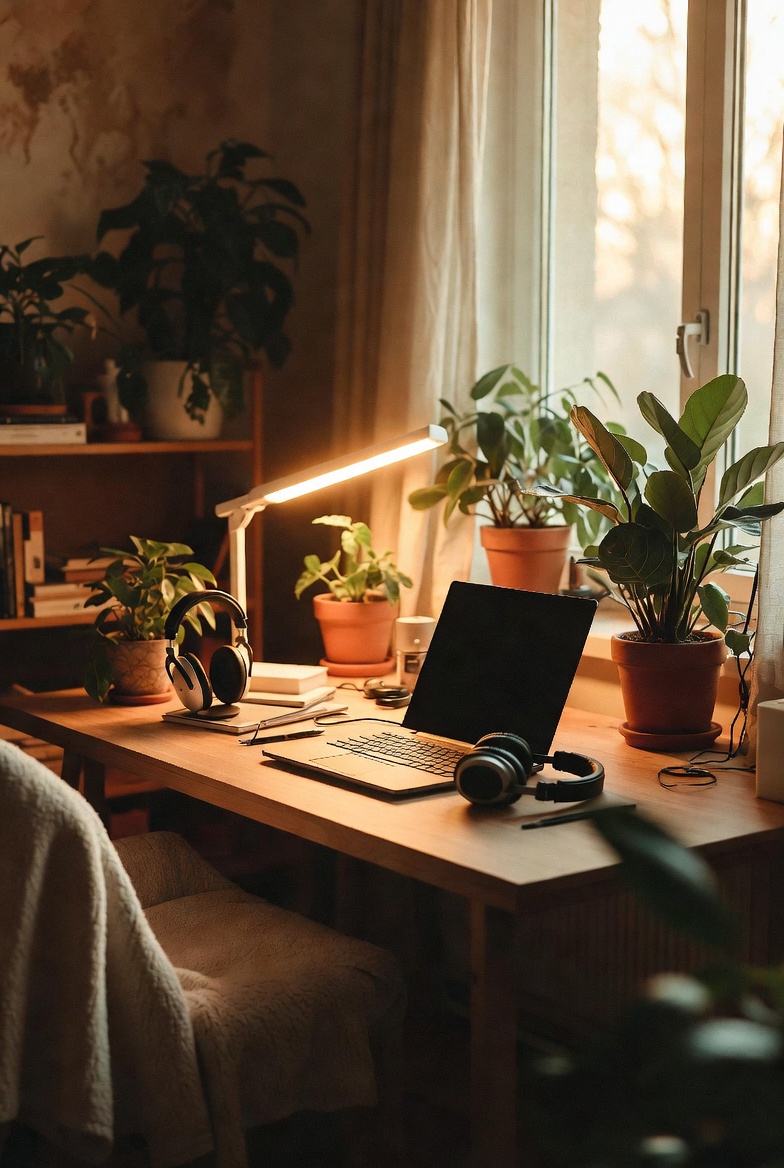
- Full-spectrum daylight lamp (especially important in Canadian winters). I also use warm lamps instead of harsh overhead lights. Plants and a few meaningful objects (not clutter) make the space feel alive but not overwhelming.
- Full-spectrum daylight lamp (especially important in Canadian winters). I also use warm lamps instead of harsh overhead lights. Plants and a few meaningful objects (not clutter) make the space feel alive but not overwhelming.
- Temperature & Movement
- A small fan or heater within reach, cozy slippers or a blanket, and permission to stand, pace, or sit on a yoga ball.
These small sensory inputs help regulate my nervous system so my brain doesn’t have to work as hard to stay focused.
3. Visual Calm with Hidden Systems
- I use drawer organizers and pretty boxes so things look calm but are easy to put away
- A big visible weekly planner on the wall (paper, not digital)
- “Current Task” card on a stand so I don’t lose what I’m working on
4. Body-Friendly Setup
- Standing desk converter (I switch positions often)
- Supportive chair with a cushion
- Footrest + stretch breaks built into my calendar
Simple Daily Systems That Help Most
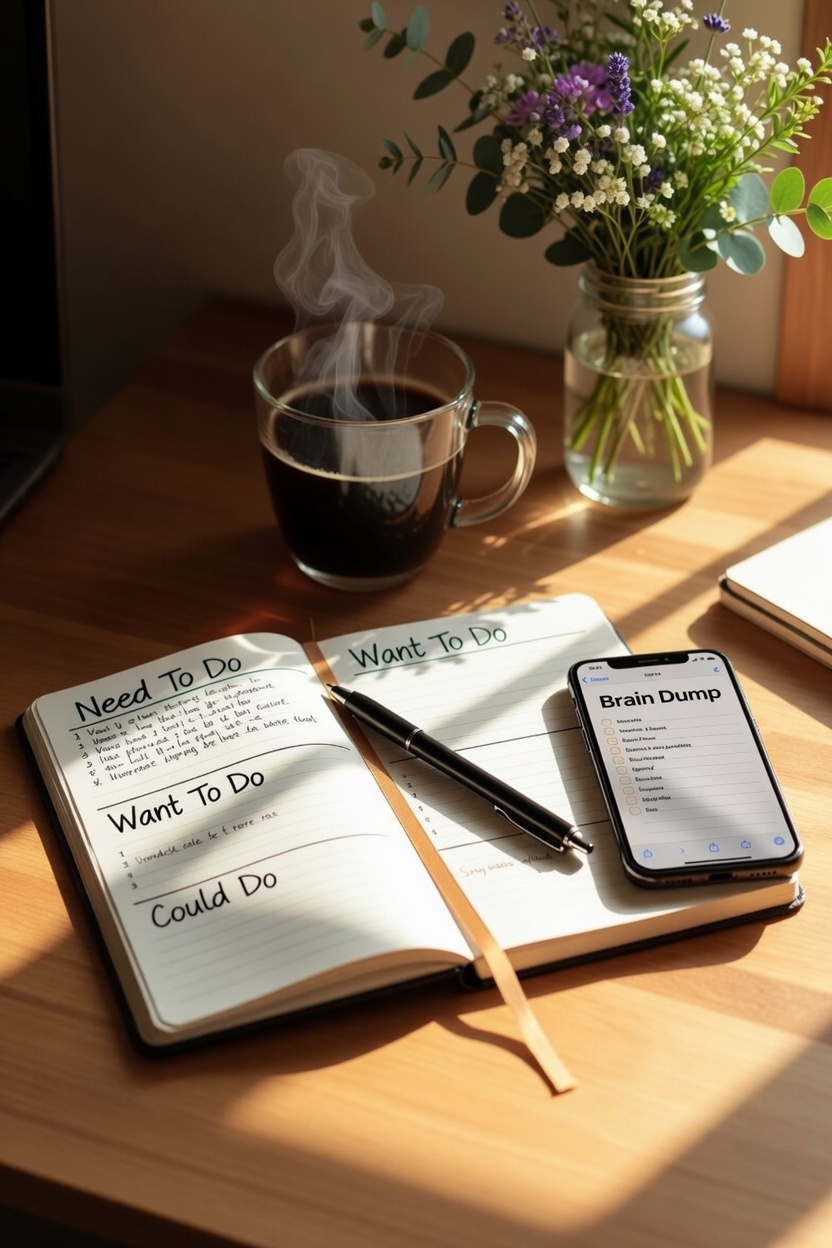
- Brain Dump first thing when I sit down
- 2-Minute Rule for starting tasks (just open the document)
- Pomodoro with grace – 25 minutes work, but if I’m in flow I let it go longer
- End-of-day shutdown ritual (close laptop, quick tidy, write 3 wins)
A Small Challenge for You This Week
Pick just one thing from this post to improve in your workspace this weekend:
- Create one clear “focus zone”
- Add one sensory tool (headphones, lighting, scent, etc.)
- Set up a visible “Today’s Task” reminder
- Learn and utilize the Pomodoro technique
Small changes in your environment can create surprisingly big shifts in your focus and mood.
Final Thoughts
Your home office doesn’t need to look like an Instagram influencer’s. It needs to support your brain.
When you design your space with ADHD in mind, work stops feeling like a constant battle and starts feeling a little more manageable — even on the hard days.
You deserve a workspace that helps you, not one that fights you.
You May Also Like
- ADHD and Emotional Regulation: Strategies for Adults
- Nighttime Supplements for Quality Sleep With ADHD
- What No One Tells You About Being a Late-Diagnosed ADHD Mom
- Rejection Sensitive Dysphoria (RSD) in Adults With ADHD
Follow Me on Facebook
Join me over on GreaterSelf where I share daily encouragement, quick tips, and behind-the-scenes moments from my ADHD fitness journey.